CONVERSACIÓN
(2000-2025)
Download textOtro tiempo en el tiempo
Text by Valeria González and Laura Lina
From 2003 to date, Gabriel Baggio has been carrying out the performance Conversación [Conversation]. It consists of the knitting of a scarf with variable dimensions (the increase in its size is directly proportional to the “layers of performance” that are added each time it is reactivated), while the artist simultaneously maintains conversations accompanied by—on some occasions—a small offering of something to eat or drink (prepared by him) for whoever wishes to share that moment with him. The experience has gradually developed in completely dissimilar places and scenarios, as part of a show, independently and even as a collective action.1
Baggio talks about how the knit piece acquires its artistic nature as it recovers the sphere of the everyday from which it originated.2 How do we inhabit our everyday spaces? How can their interstices, their possibilities for resistance and their creative potential be encountered? Michel de Certeau investigates the link with consumption as production, not as passive or anesthetized swallowing, but as a creative appropriation through use: “ways of using the constraining order of the place.”3 The antagonistic relationship between tactics and strategy are central to his theory. All the calculated manipulation that a subject with will and power (a business, an army, a city, a scientific institution) deploys in a proprietary space is strategic. Strategy “postulates a place that can be delimited as its own and serve as the base from which relations with an exteriority composed of targets or threats . . . can be managed.”4 A tactic, in turn, is the art of the weak on the terrain of the Other. In such fixed places with totalizing discourse, it deploys its tricks, made of time.
Conversación can be considered a configuration of resistance tactics in the face of univocal truths that are fixed as absolutes and delineate a knowledge that is the product of the patriarchal, heteronormatized configuration in which it is inscribed. It is a soft action that mutates, accompanying the contours of the bodies of both artist and participant, generating a transformative operation that also exercises the delineation of a section of time and space, presenting the possibility of a pause that stops time and converts it into a different time, the singular rhythm pertaining to an exchange. In addition, it recovers the almost magic significance of interpersonal communication, so bastardized in times of communication overdose, and in that talk simultaneously reinstates a new appreciation of the idea of “chit-chat” as a feminine resource of caring and transmission of information that occurs in marginal or boundary scenarios, as opposed to the idea of masculine “speaking” in places of privilege where that power is legitimized. Once again, Baggio assumes the place of the feminine in order to operate critically upon the strictly confined codifications that constitute the matrix of masculinity in some contemporary art propositions. On this point we can speak of a feminization of performance:5 .” . .feminization produced each time a poetic or erotic sign exceeds the retaining/containing frame of masculine signification with its rebellious surpluses (body, libido, pleasure, heterogeneity, multiplicity, etc.) in order to deregulate the majority discourse’s thesis.”6 If Penelope weaves and unravels to configure a cyclical temporality to temper the wait for her beloved, Baggio manages to bend the passivity of the wait: stories of his own amalgamate in incessant knitting, leaving tracks of the act of making that trace a mnemonic weave that also secretly keeps the whispered voices and gestures of complicity from the occasional participants and witnesses.
_____________________________________________________________
1 One example of this is the participation in the “Arte y confección, semana cultural por Brukman” [Art and Sewing, Culture Week for Brukman] series, carried out in May, 2003. The event invited numerous artists from diverse disciplines to support the textile workers in their actions of resistance in the recovered Brukman factory, and it was held in a public square a few meters from the factory building (on Jujuy and Mexico streets), where the workers, all women, had set up a permanent camp.
2 See the interview between Federico Baeza and the artist in this same publication.
3 De Certeau, Michel; Giard, Luce and Mayol, Pierre (2000 [1980]). La invención de lo cotidiano, Mexico, Universidad Iberoamericana, volume I, p. 36.
4 Op. cit., p. 42.
5 We take this concept from the notion of the “feminization of writing” discussed by Nelly Richard in Richard, Nelly (1989). Masculino/Femenino. Prácticas de la diferencia y cultura democrática, Santiago de Chile, Francisco Zegers Editor.
6 Ibid., p. 35.
English version: Tamara Stuby
2020
Excerpt from the main text of the book La Tarea
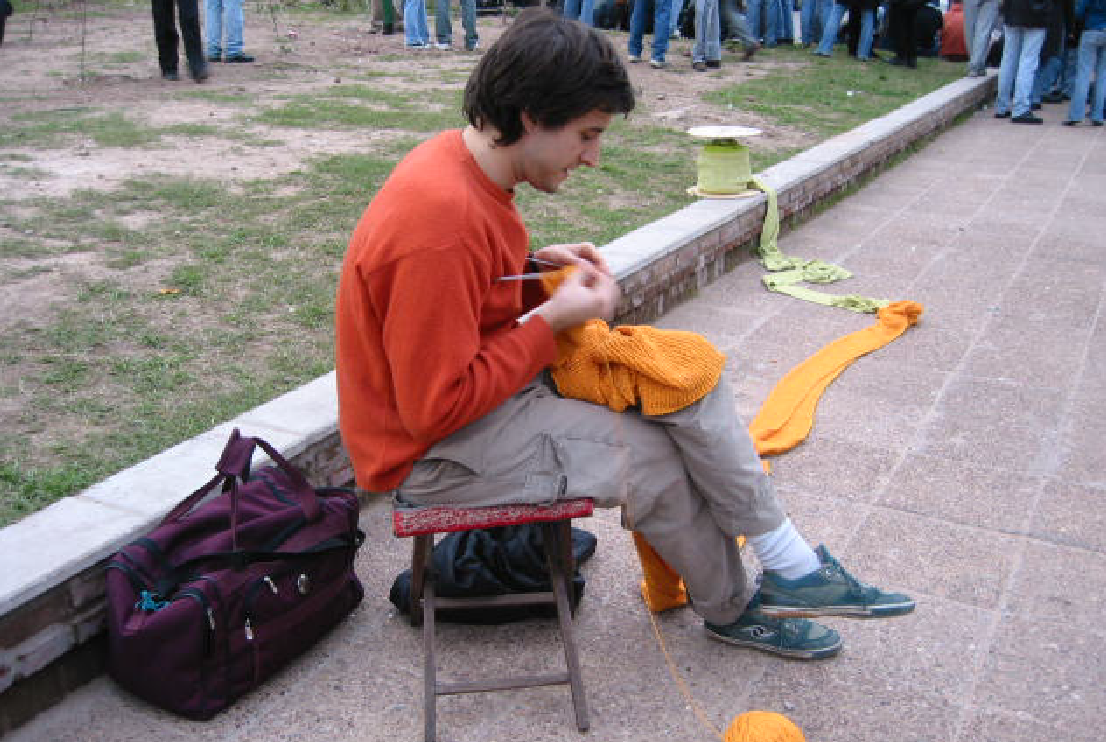
Conversación, 2003. Festival Arte y Confección, en apoyo a las trabajadoras de Brukman, Plaza Velazco Ibarra, Buenos Aires. Performance.
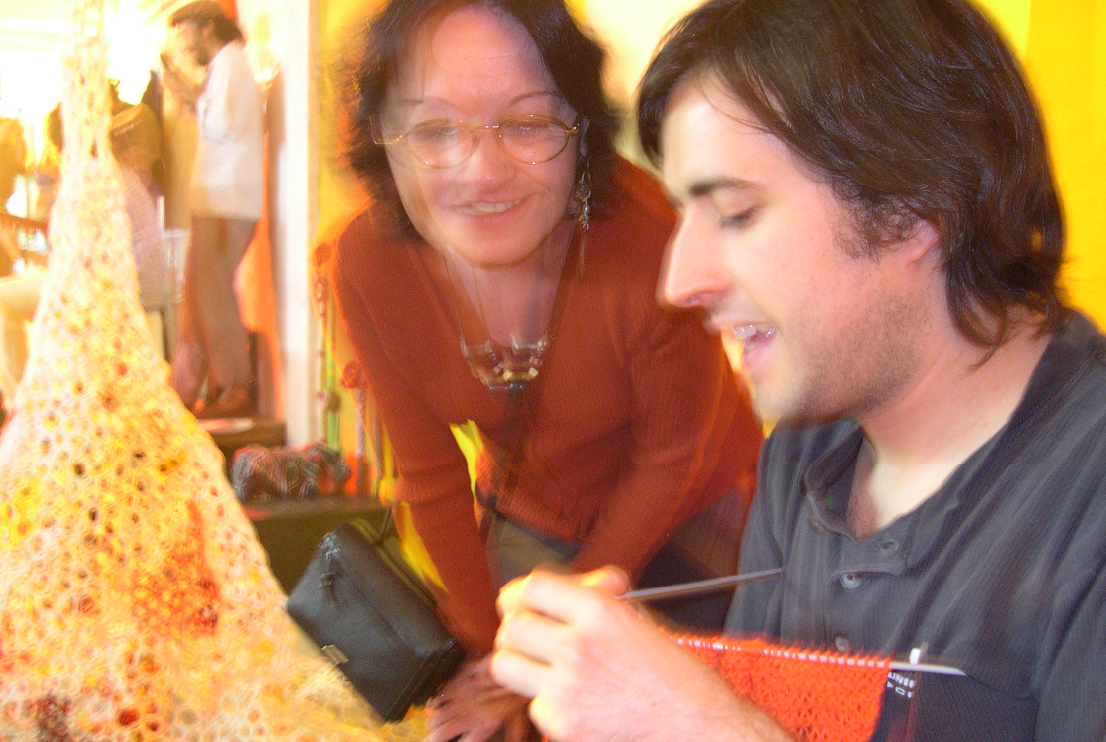
Conversación, 2003. La noche de la lana, local de economía solidaria en asamblea popular del barrio de Saavedra, Buenos Aires. Performance.
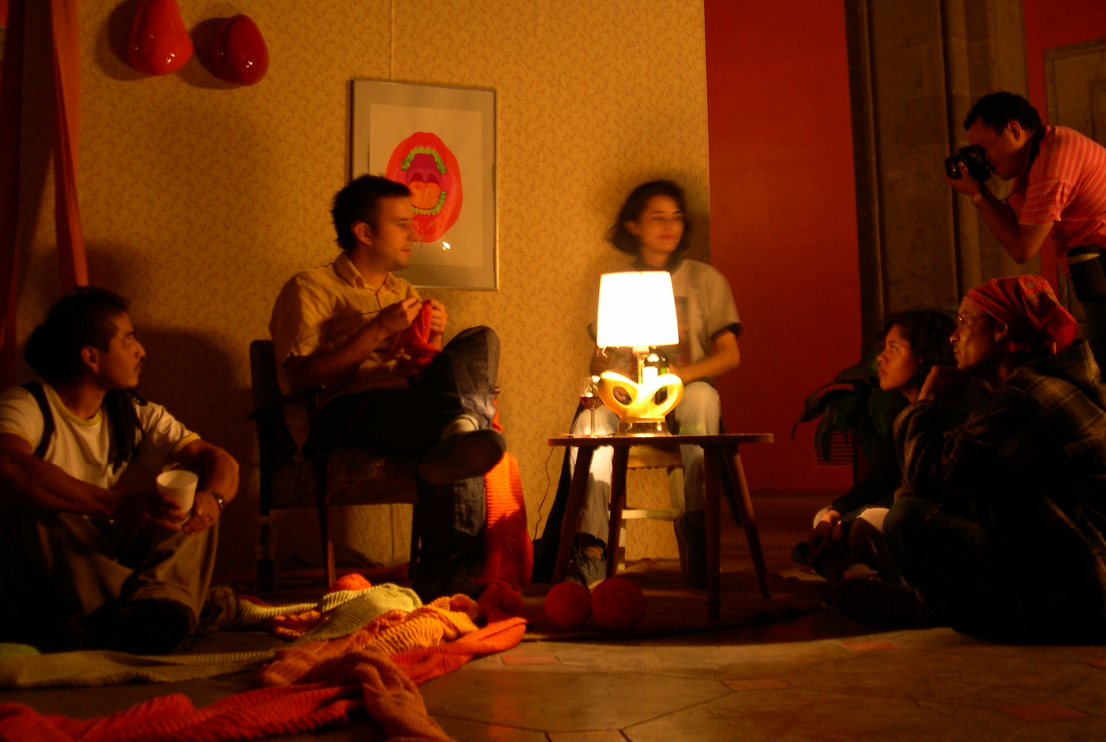
Conversación, 2007. Performagia, Encuentro Nacional de Performance, Museo Universitario del Chopo, UNAM, México DF. Performance.
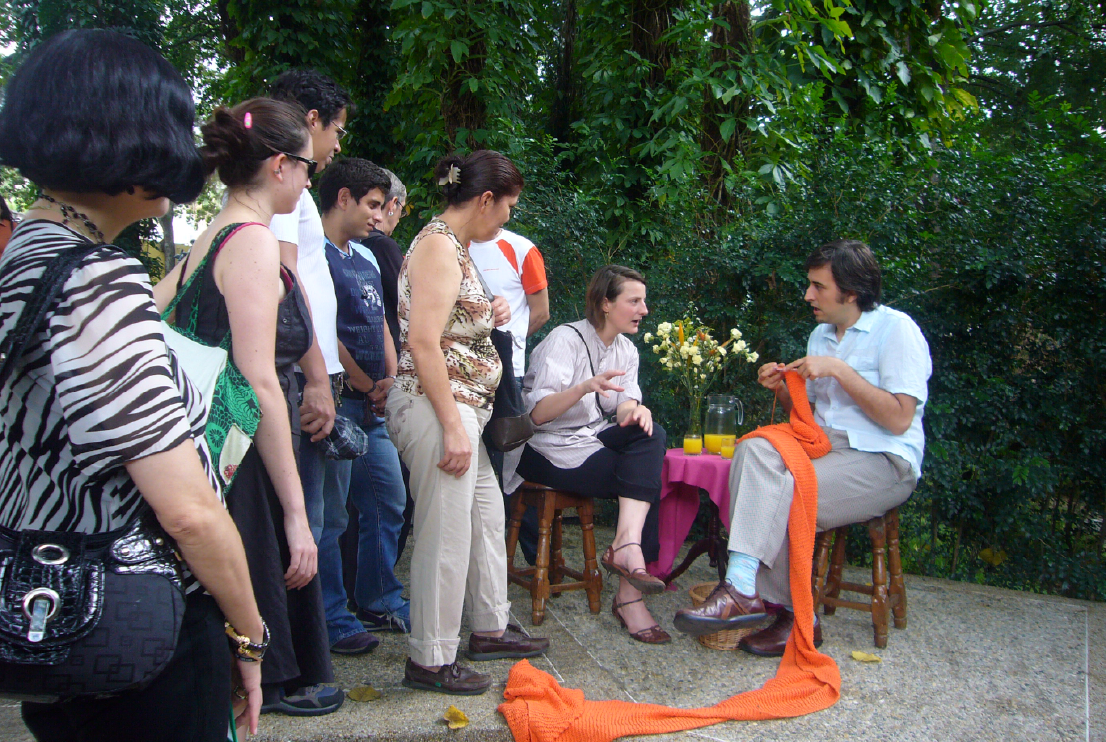
Conversación, 2008. Festival de Arte Corporal, Museo de Bellas Artes, Caracas. Performance.
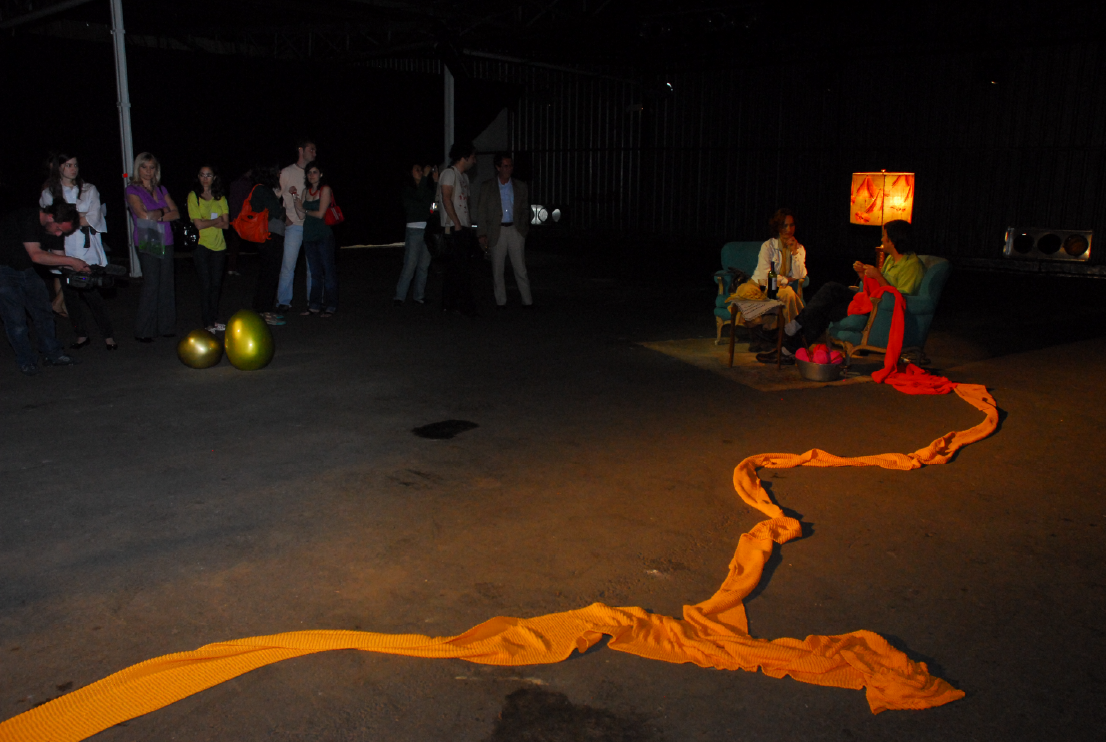
Conversación, 2008. Límite Sud, Centro de Exposiciones de la Ciudad de Buenos Aires, Buenos Aires. Performance.
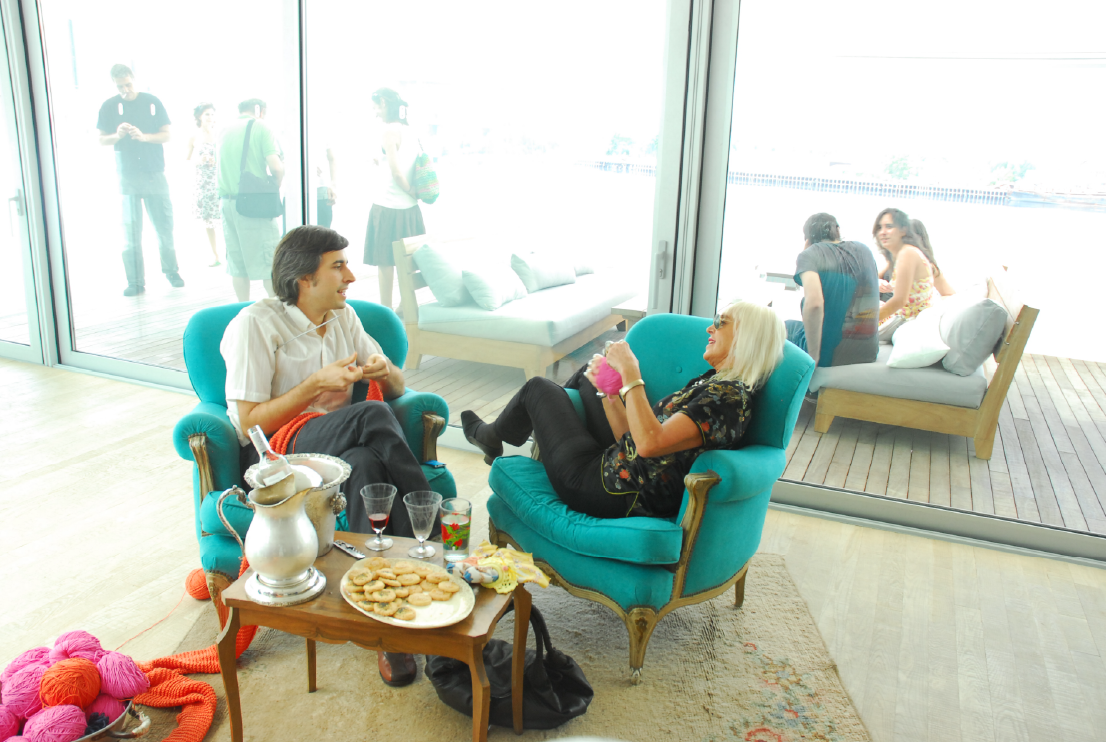
Conversación, 2009. Las comisuras de la boca, Fundación Proa, Buenos Aires. Performance.
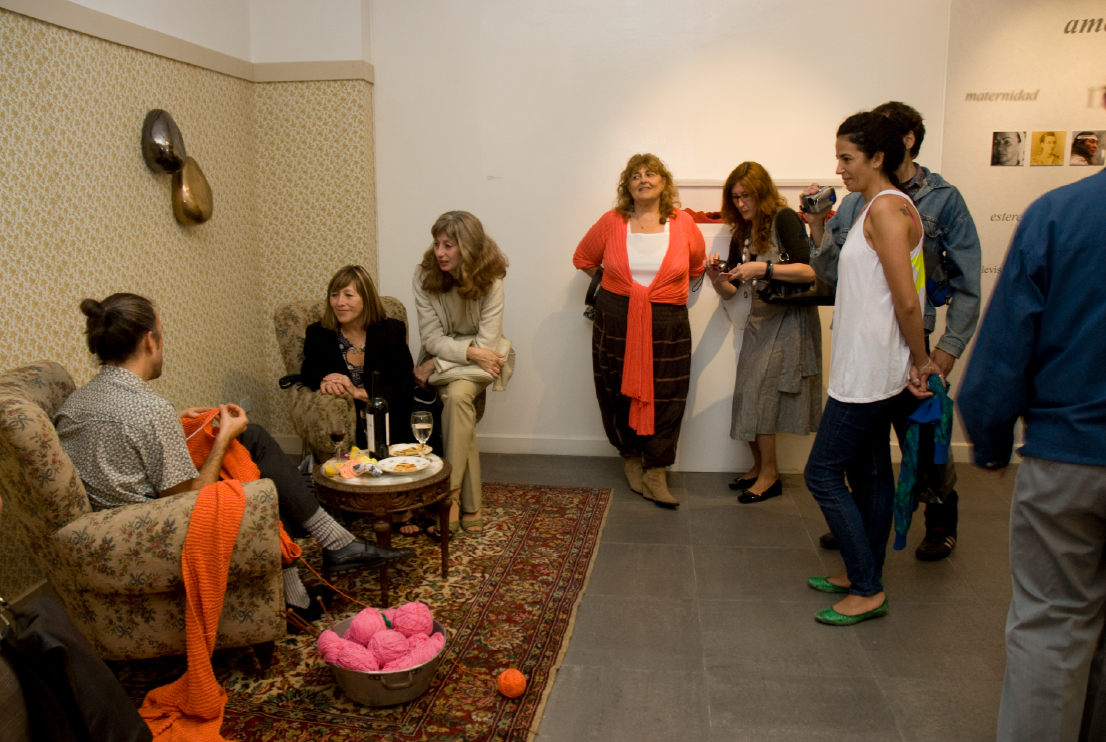
Conversación, 2010. Mujeres. 1810-2010, Casa Nacional del Bicentenario, Buenos Aires. Performance.
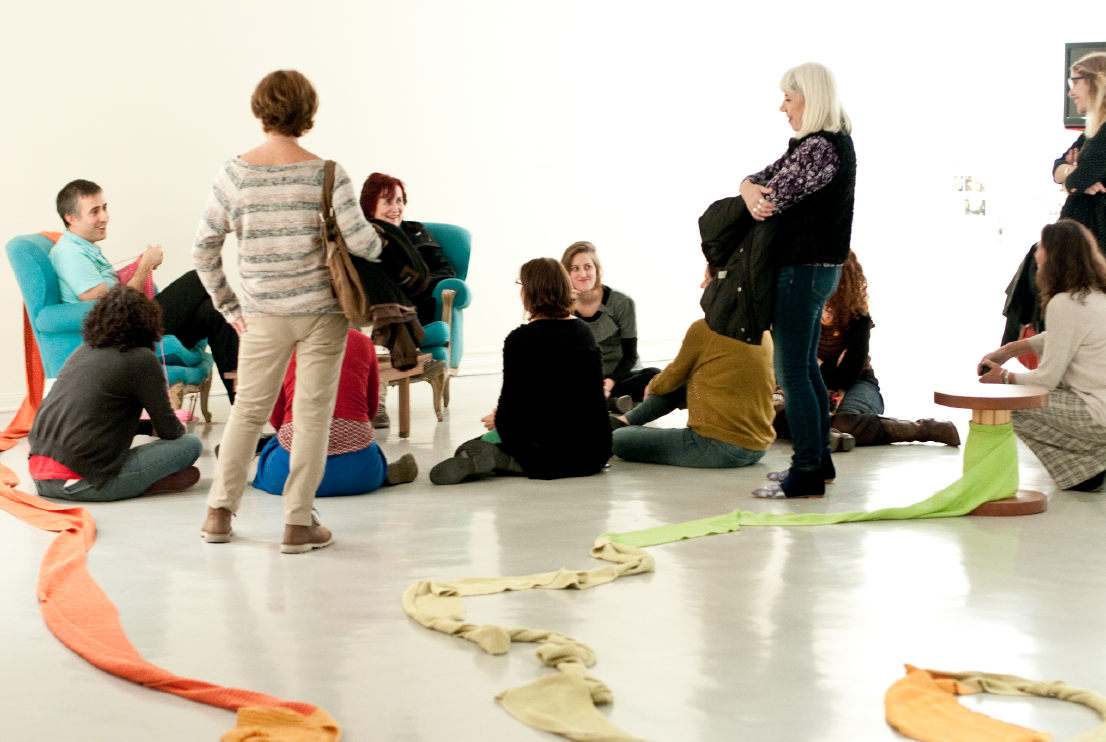
Conversación, 2014. Yo, nosotros, el arte, Fundación OSDE, Buenos Aires. performance.
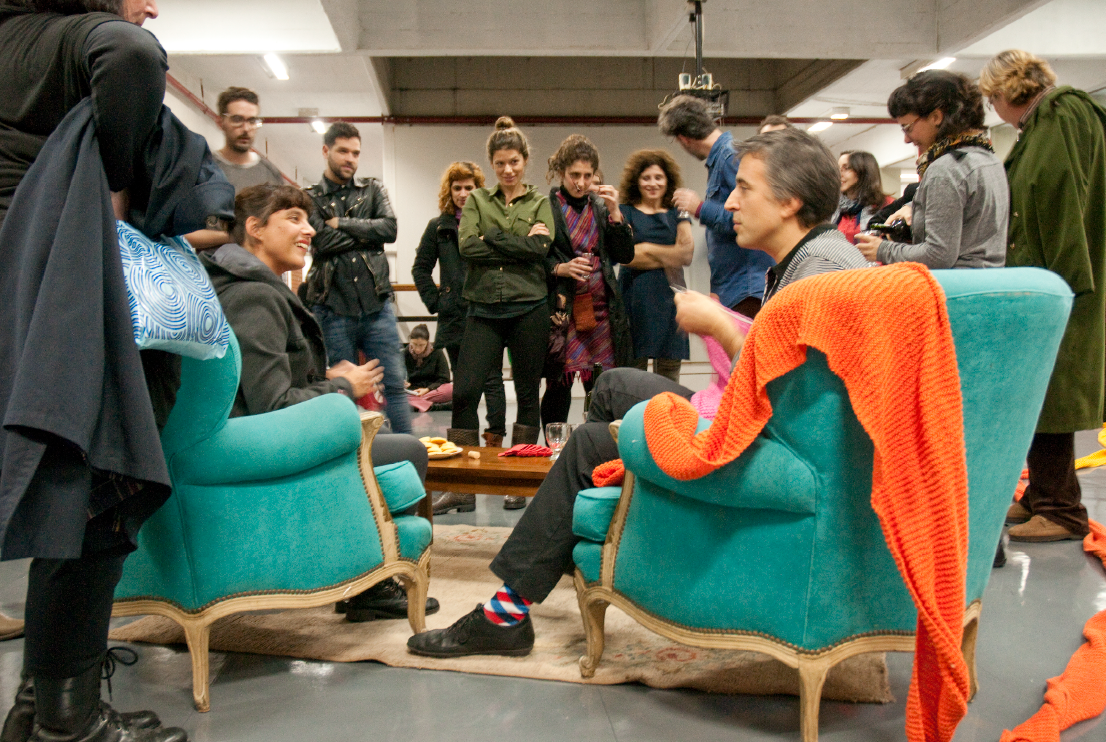
Conversación, 2014. Ciclo Intimidad Escénica, Universidad Nacional de las Artes, Buenos Aires. Performance.
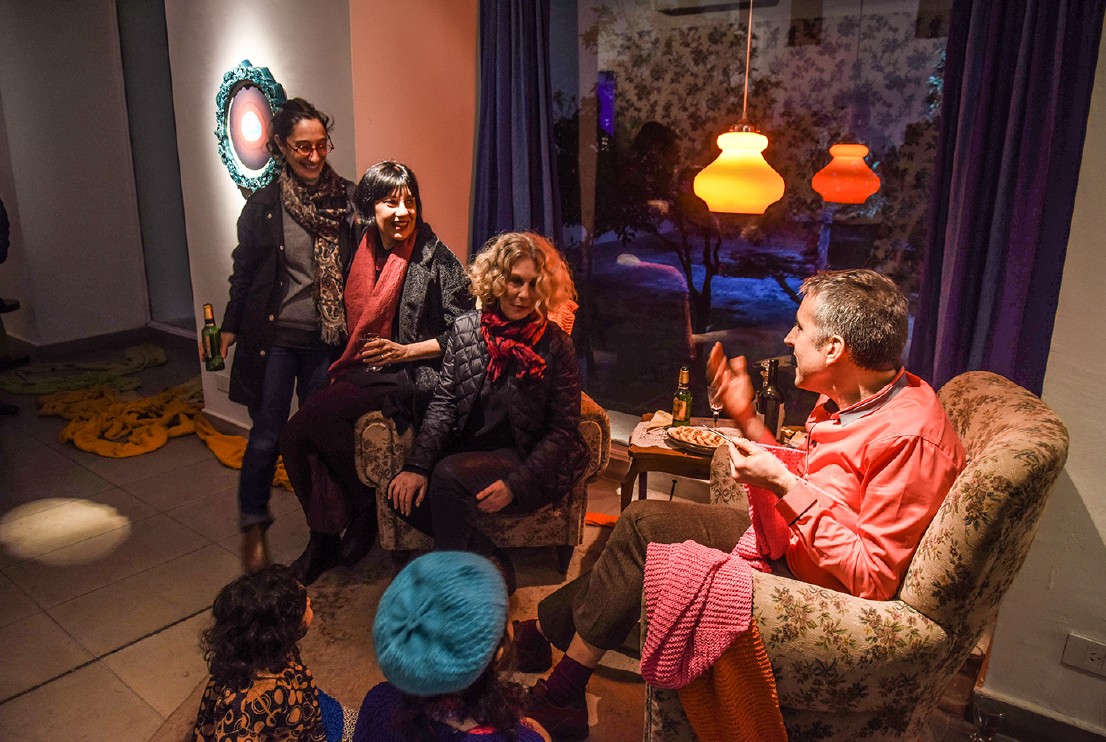
Conversación, 2016. La mano inteligente, Centro Cultural Recoleta, Buenos Aires. Performance.
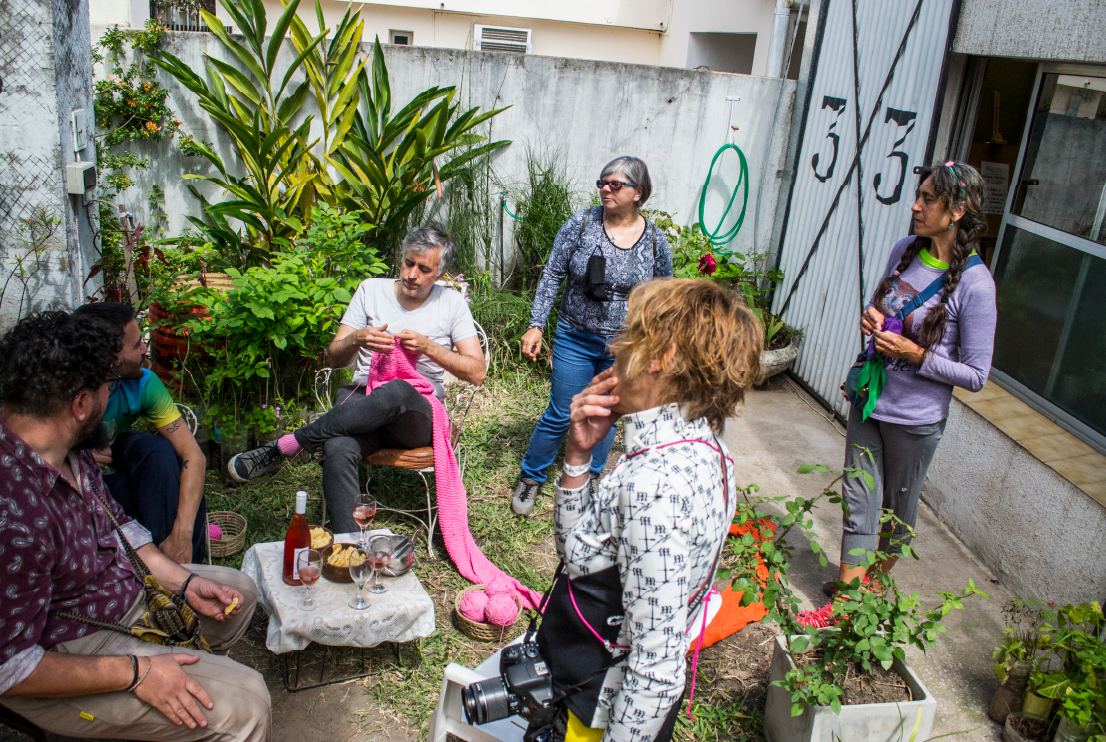
Conversación, 2021. Biblioteca La Lechuza, Chajarí, Entre Ríos. Performance.