DESDE EL ALMA
(2007)
Download textText by Valeria González
In the beginning, there was the encounter and harmony between three artists. “The first certainty was the level of interest in each others’ work, and a sense of identification with the manner of speaking about one’s own life history: Zoe through her narratives, Gabriel through his inheritance and Carolina by way of the vestiges.”
This manner of speaking was not that of biography, which presupposes the importance of a particular subject and then, everything that happens, no matter how insignificant, turns out to be interesting to others. Our artists do not tell us the story of their lives, they construct meanings with their experience and memory as the point of departure. Their confessional tone is absolutely honest, and nevertheless, what makes these stories relevant for us is an artifice. An artifice that is ethical and aesthetic at the same time.
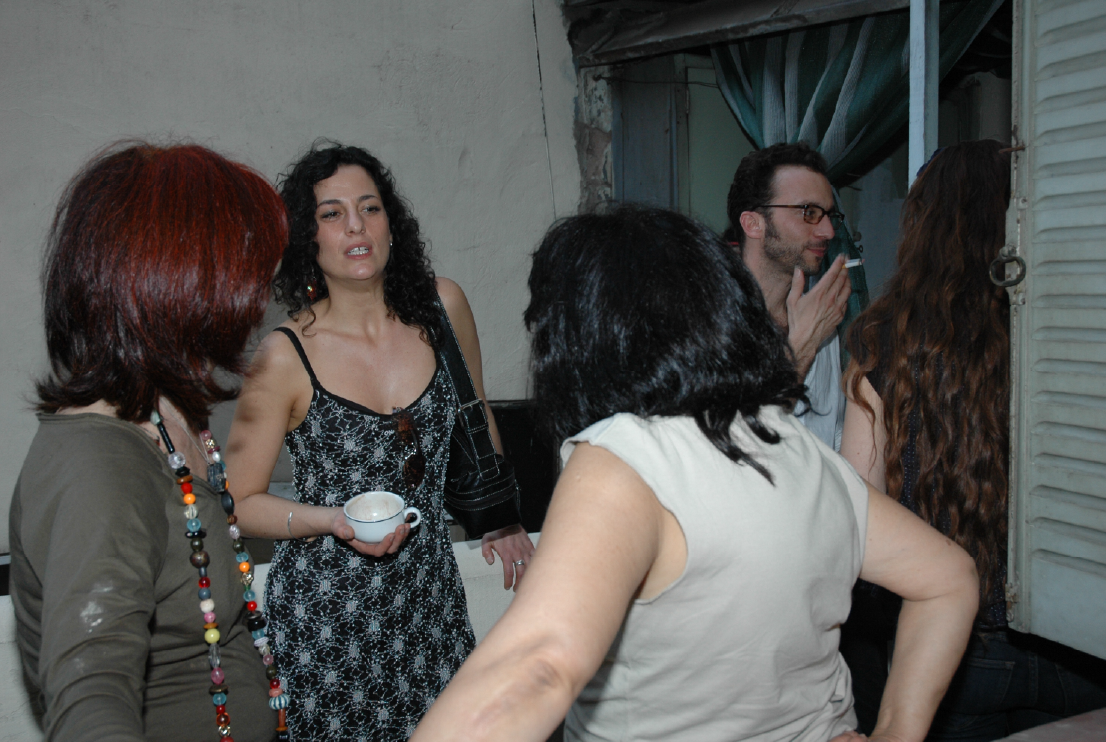
All three work in different visual languages. They are motivated and oriented according to similar values, however. They have a common desire to search into childhood memories and practices from past generations that have gone out of style in order to recover tools with which to produce different experiences. An old apartment in the Once neighborhood emerged as the perfect site on which to elaborate this world in common. “It could be my grandmother’s house or that of anyone from whom I like to learn: people who continue to make clothes by hand, to cook every day, to weave or to handcraft their own utensils,” Baggio said. It turned out to be difficult to distinguish between furniture, arrangements or decorations, to tell which things were “works” by the artists and which things pertained to the house. Such a distinction would lead nowhere, in any case, because the artistic gesture +is+ the identification with these lost worlds that can still be evoked in places like this. It isn’t about an “installation,” but rather inhabiting the place. +Desde el alma+ proposed a particular space of living together, of idiorhythm; between the artists, who all carried out performances that took place simultaneously, and between the guests, who were invited neither as viewers nor participants but as guests. The experience took on the form of a reception, freely given; the artists acted as hosts.
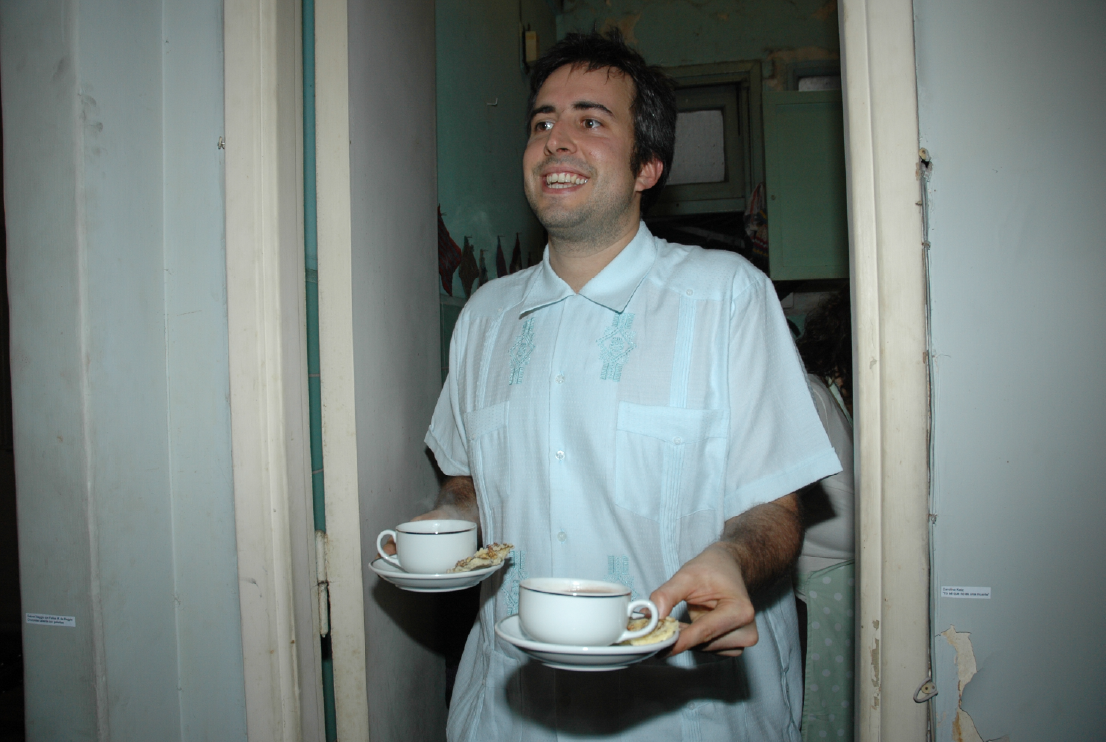
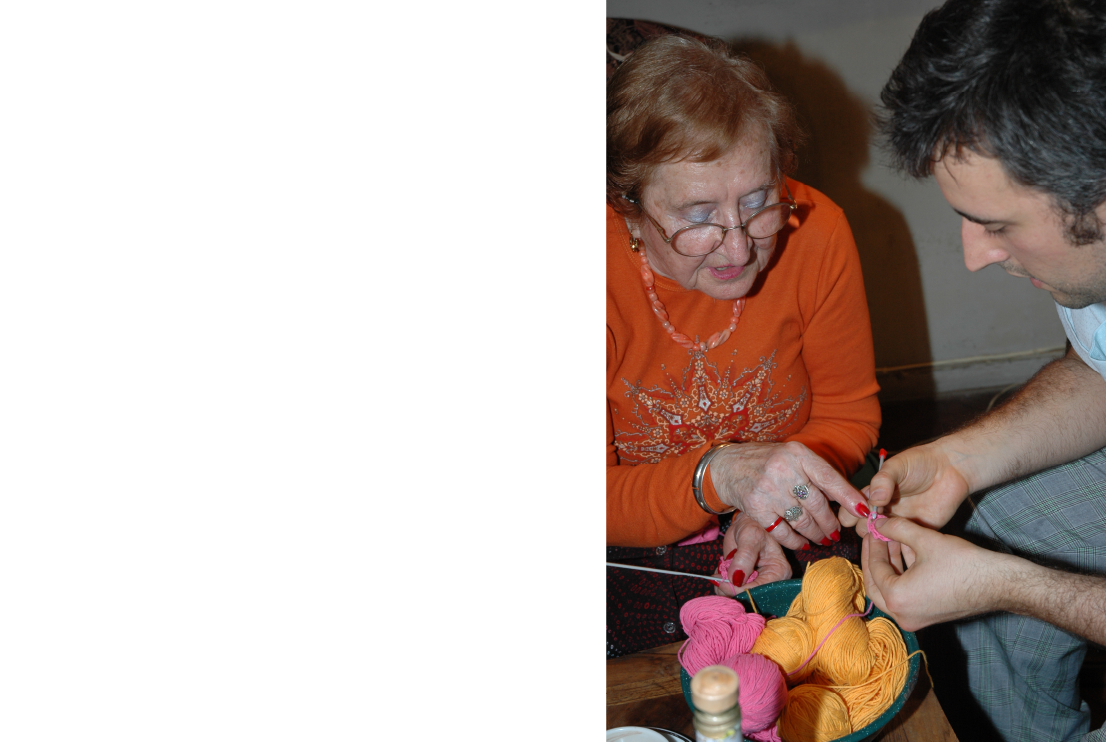
On preceding pages, we have already made mention of Gabriel Baggio and the way he constructs his own genealogy as an artist, positioning himself as an apprentice for handicrafts that conserve those times that our ancestors so meticulously stretched longer. On this occasion he and his mother prepared hot chocolate and kujelles and he took a crochet class from his neighbor Cita. “This isn’t about a recompilation of crafts that are almost lost to us, I’m interested in living the experience from the inside.” In these manners of doing, Baggio perceives a reserve of symbolic, vital resistance to capitalism’s cultural homogenization. As Walter Benjamin said, certain traditions that are about to disappear or become obsolete have the power to convert themselves into dialectic images of the present.
In early 2000, Carolina Katz began to almost instinctually accumulate the remains of her everyday life in two curiously complementary series. On the one hand, she collects the countless agendas, notepads and slips of paper where she organizes her activities and quantifies tasks, items that she crosses off, one by one, every day, once they have been completed or rescheduled. Carolina occupied an entire room in the house with this material. The accumulated time on organization charts and crossings out unfolded like an enormous mantle in space. Even though it was not part of her plan, the artist wound up talking with those present about every last detail. She recalled when, as a child, she was fascinated by the moment when her father would crumple up little papers and throw them into the waste basket. In its excess, the regulated workaday world connected once again with its loving source.
On the other hand, the artist would continually shoot self-portraits with her instamatic camera. She says it was a kind of exorcism of loneliness. Since 2005, this ritual has given rise to a quite singular production. Carolina concentrated on documenting her instances of lovesick crying, she began to collect and catalog her tears and to keep the remains of passing or frustrated relationships in little labeled bottles. The incongruence of the temperature between content and methodology reveals that this delicate system of signs cannot be reduced to a simple expression of feelings. One of those present understood that the sentimental aspect evoked in +Desde el alma+—that Julia Elena Dávalos herself contributed, singing the quaint old waltz again—was actually a way of calling attention to the anesthesia that isolates us and an attempt to make us vulnerable to others once again.
“I’m interested in receiving an artist’s grant and that my work consists of learning from someone older.” In his learning performances, in addition to creating a shift in the knowledge of art, Baggio evokes childhood, not as someone who obeys elders’ instructions, but as someone who relates to others and gets to know objects by way of experience. Here, as well, Walter Benjamin thought it necessary to redeem children’s repressed cognitive capacity, that instead of accepting the given significance of things, learn from them by taking hold of them, using and transforming them. He said that this uninterrupted connection between perception and action was a revolutionary consciousness and that the role of the militant writer was much more that of a storyteller than of a commander. In 1928 he defined his +Arcades Project+ as a “fairy tale.”
Almost ten years ago, while still in Córdoba, Zoe Di Rienzo came across a notary’s book (+Droguería del Mercado S.A.C.I. Caja y Bancos Nº 11+). Fascinated by its solemn 500 ultrathin sheets bound in a hard cover, she began to populate it with stories and watercolors. Trips, events, relocations and personal ties then followed. Zoe continued on with the chronicle of her life, writing and illustrating as storytellers do. Lived experience became adventures; and people, characters. At the house, she read pages to those present as if she herself were a fairy from one of the tales. Her dress was green, the chair was green and the wall was green, just like the book. The fiction settled into the atmosphere like a serious ceremony. Listeners were moved without breaking the silence.
+Desde el alma+ was completely recorded in video and photographs. Nevertheless, it is notable that the witnesses who were present insist on remembering precisely the things that cannot be documented. Smells, temperature and collective memories reactivated by the encounter, the simultaneous sensations and emotions. We are familiar with many installations and performances carried out beyond the limits of the museum. The specific difference with this experience is that its ultimate meaning winds up being impossible to translate into the language of art.
English version: Tamara Stuby
2010
Text excerpt in En busca del sentido perdido. 10 proyectos de arte argentino (1998-2008).
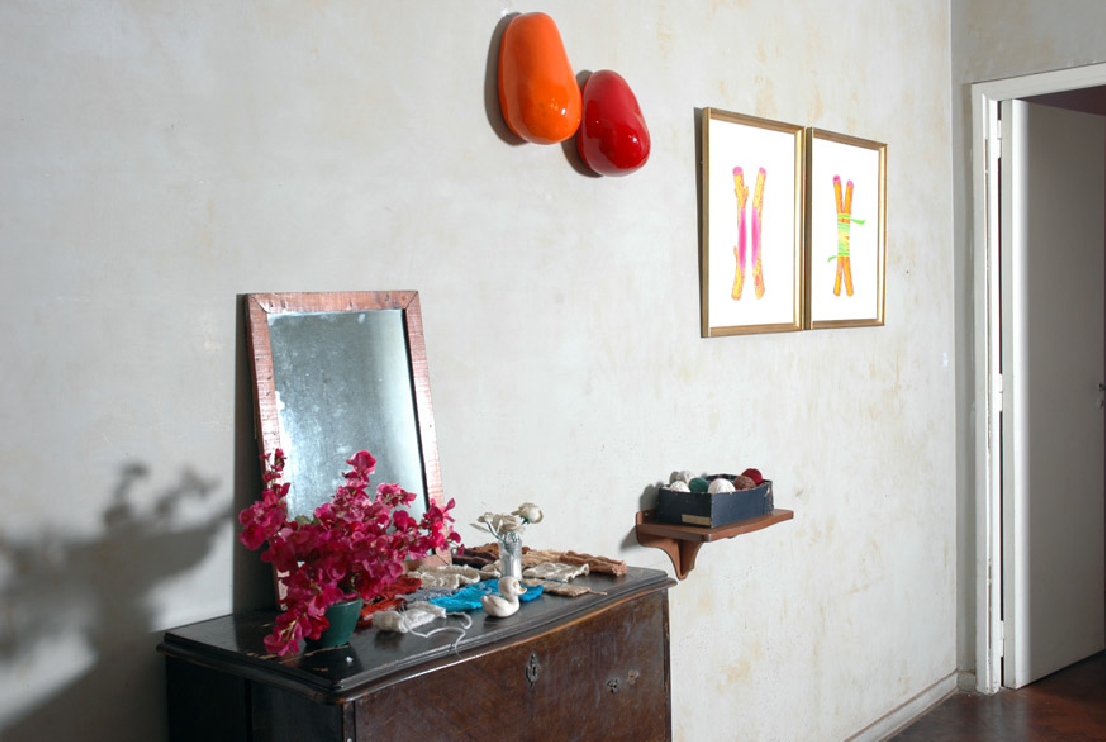
DESDE EL ALMA. Exhibición colectiva (junto a Zoe Di Rienzo, Carolina Katz y Julia Elena Dávalos), departamento deshabitado en Buenos Aires, Argentina, 2007.
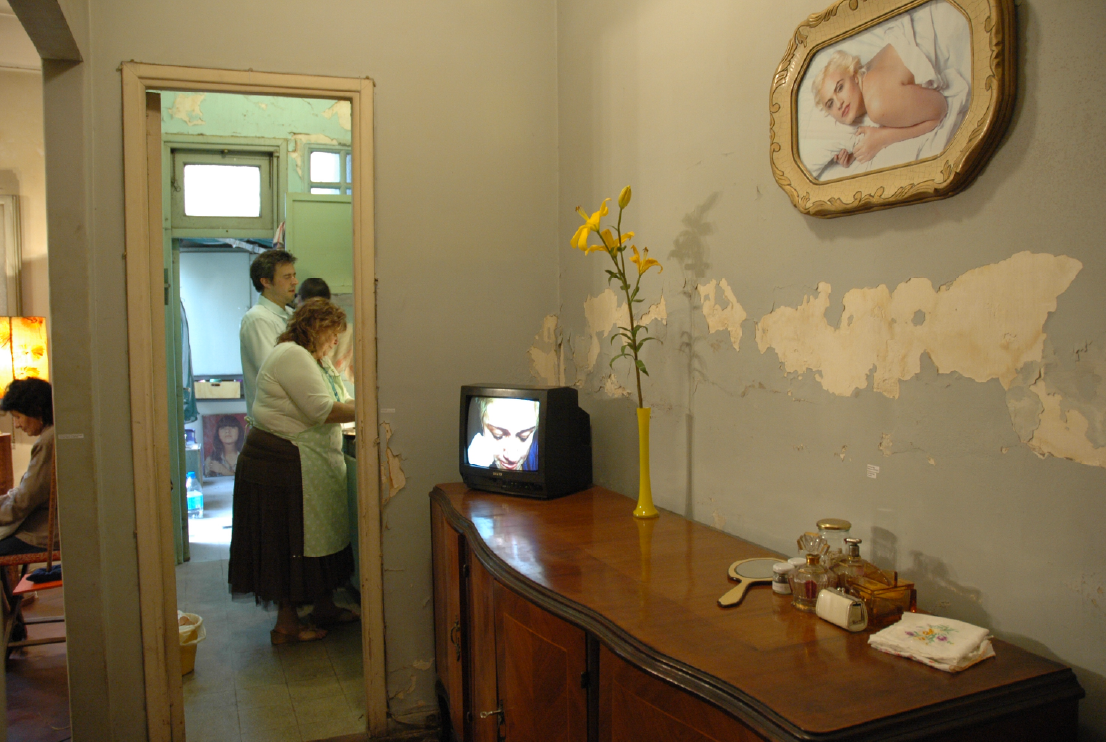
DESDE EL ALMA. Exhibición colectiva (junto a Zoe Di Rienzo, Carolina Katz y Julia Elena Dávalos), departamento deshabitado en Buenos Aires, Argentina, 2007. Vista de la cocina.
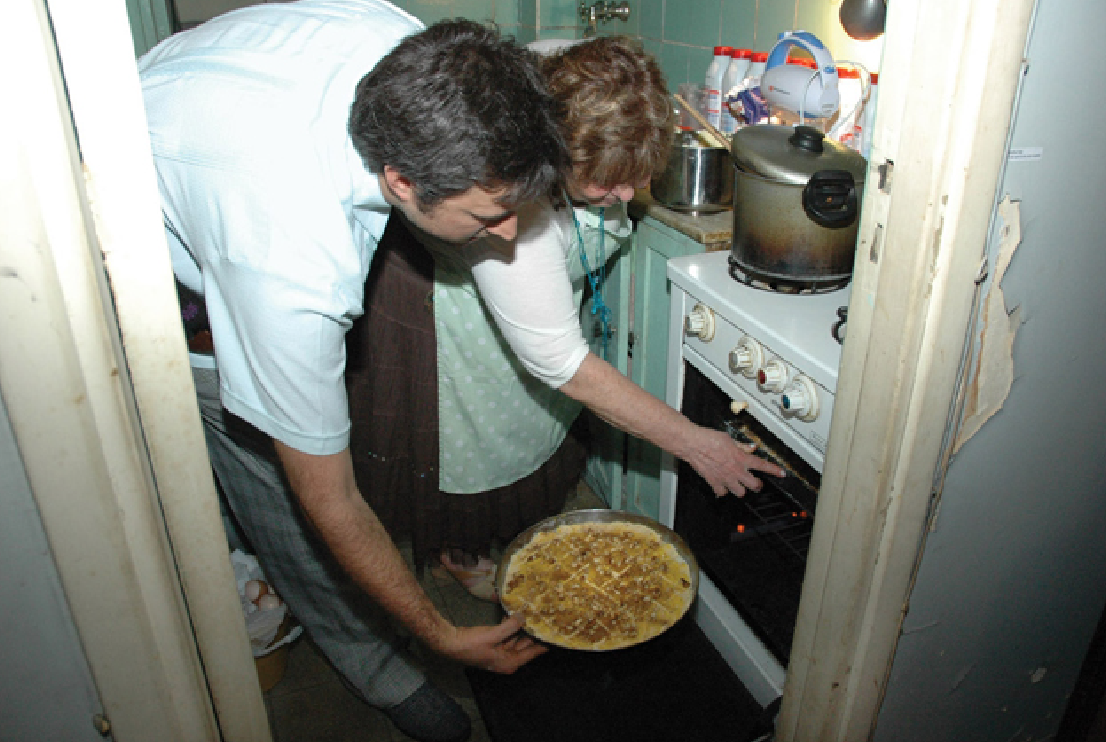
Chocolate caliente con kujelles, 8 de septiembre de 2007. Performance junto a Felisa Mayansky (madre del artista).
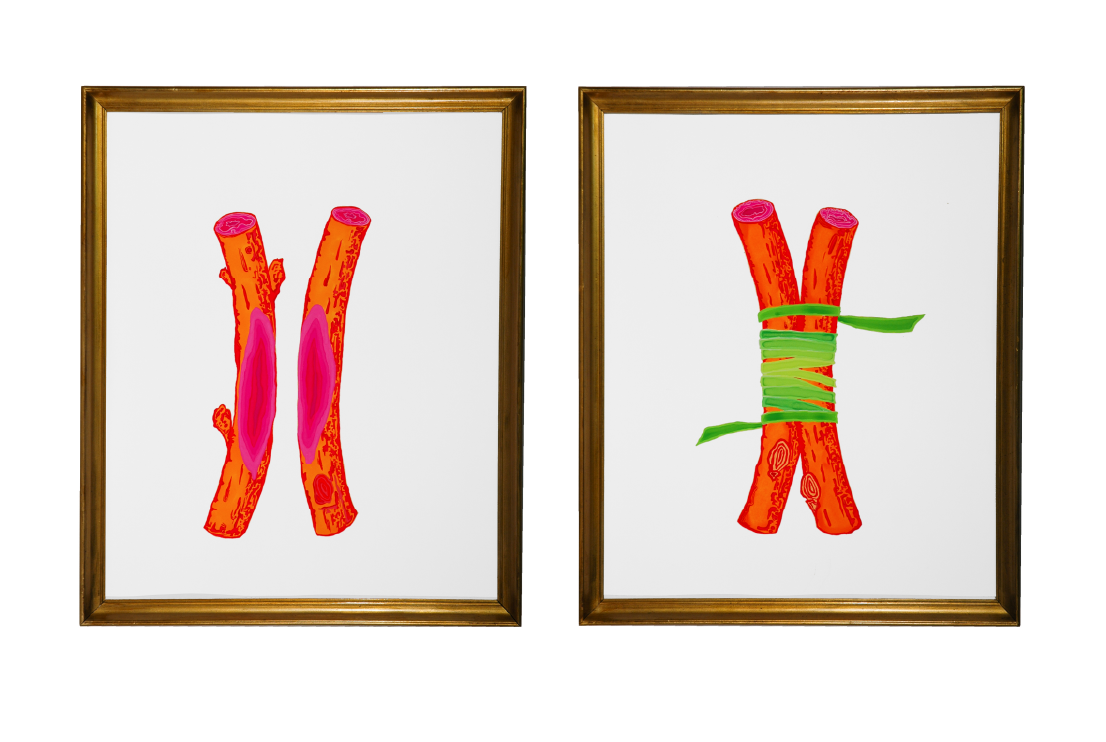
Injertos de aproximación lateral, 2007. Gouache sobre papel. 70 x 110 cm.-05
.
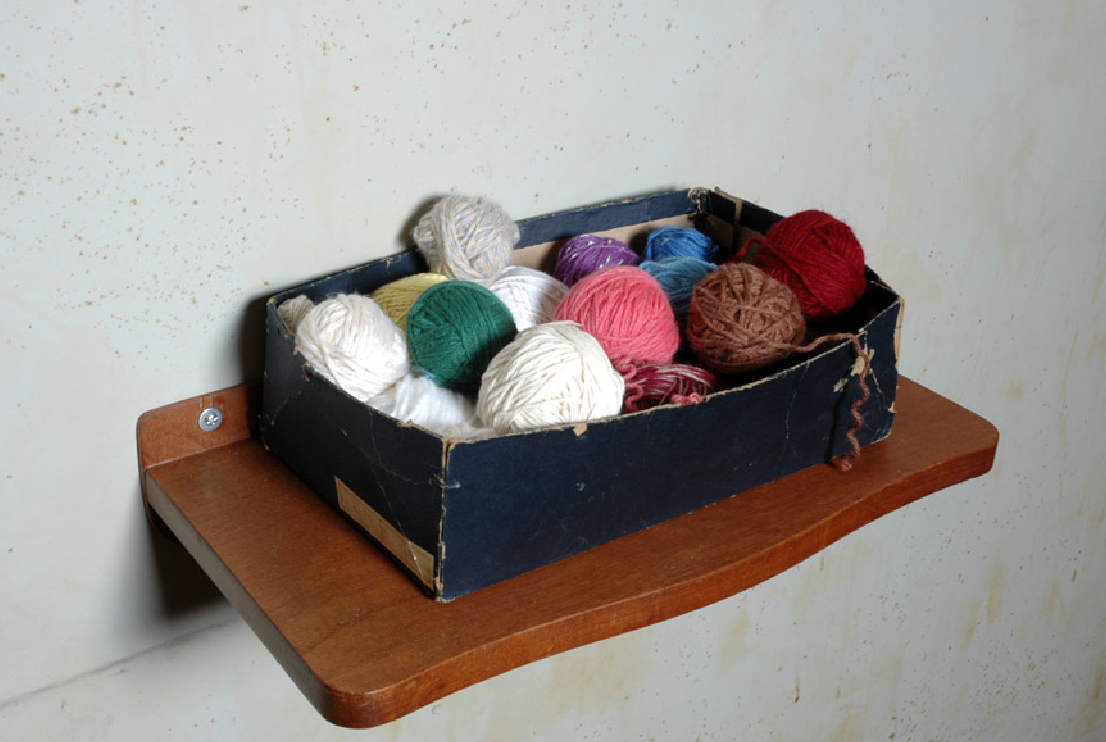
María Zago de Baggio. Ovillos y pruebas de tejido, entre 1940 y 1980.
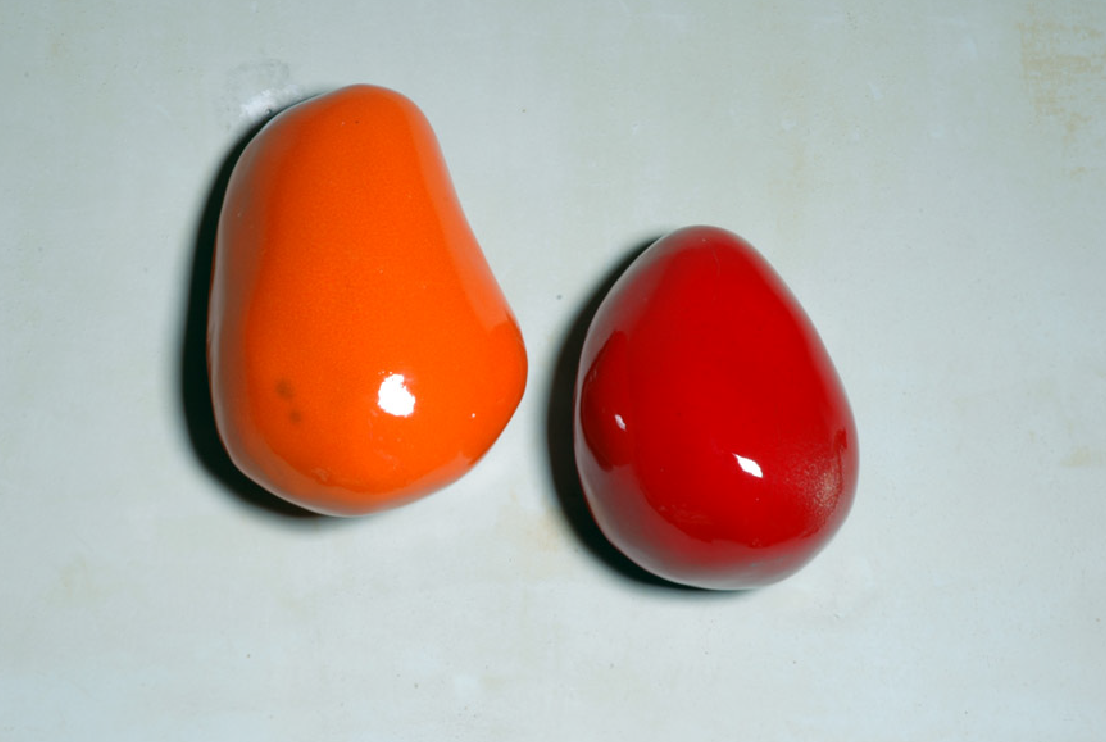
Reserva calórica, 2007. Cerámica esmaltada. 30 x 40 cm.
.
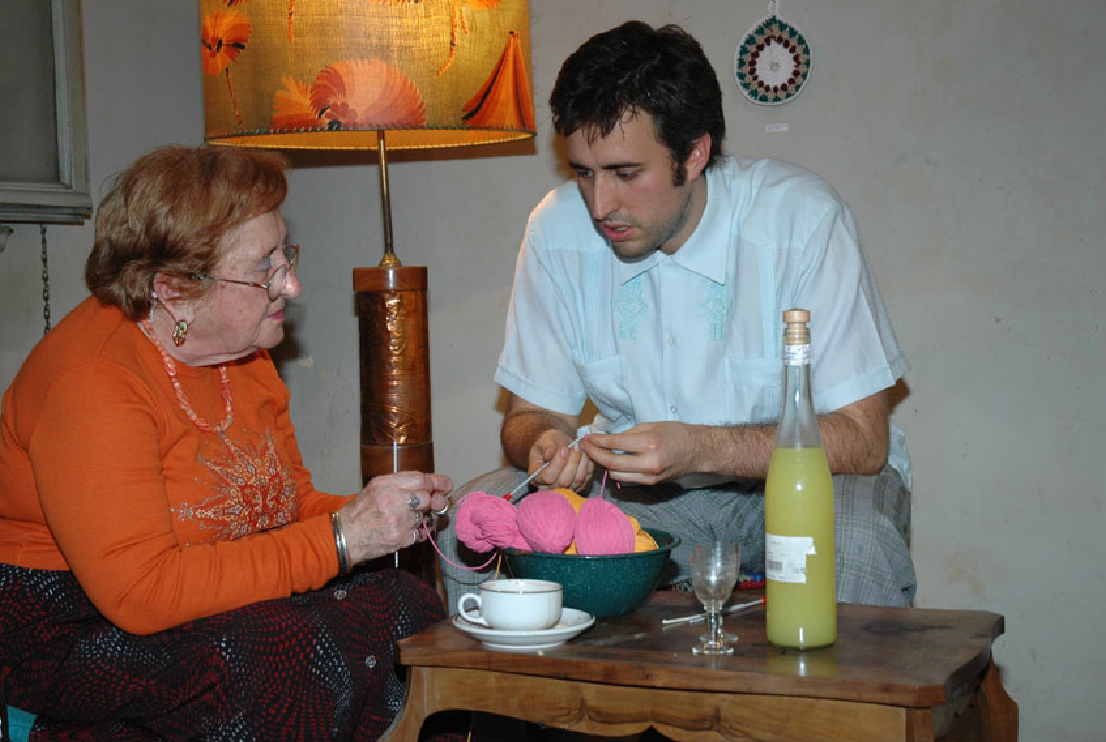
Agarradera tejida al crochet, 2007. Performance junto a Cita, vecina del artista.
.
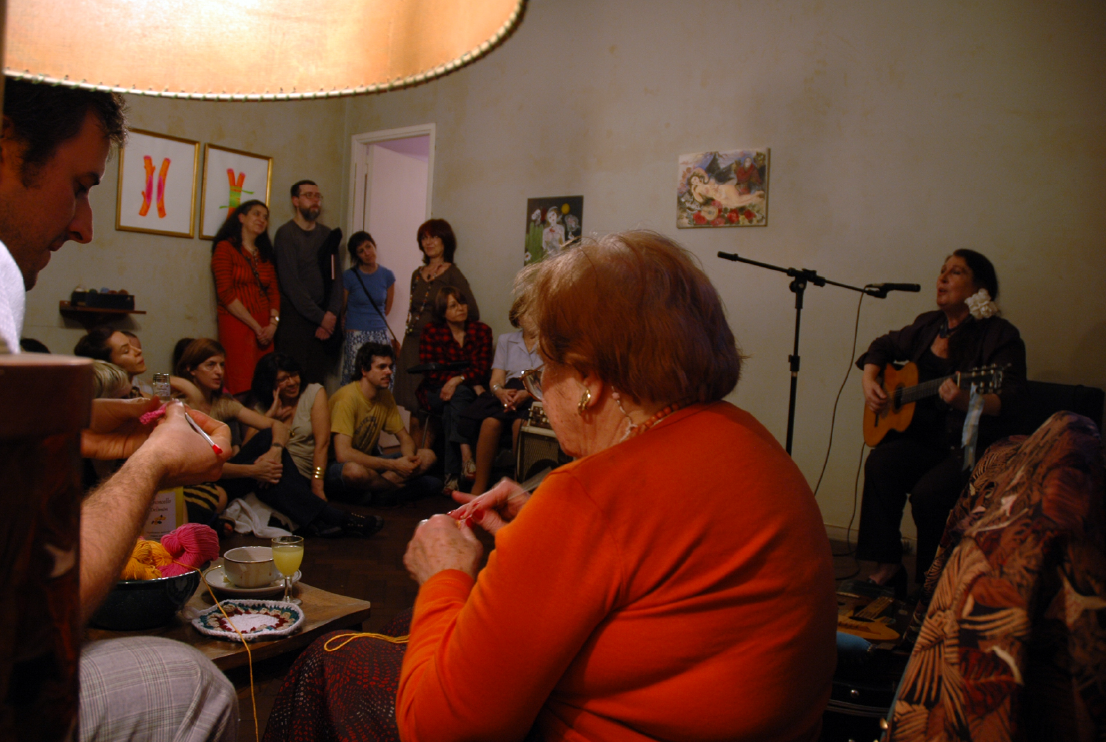
DESDE EL ALMA. Exhibición colectiva (junto a Zoe Di Rienzo, Carolina Katz y Julia Elena Dávalos), departamento deshabitado en Buenos Aires, Argentina, 2007. Vista general del living mientras canto Julia Elena Davalos.
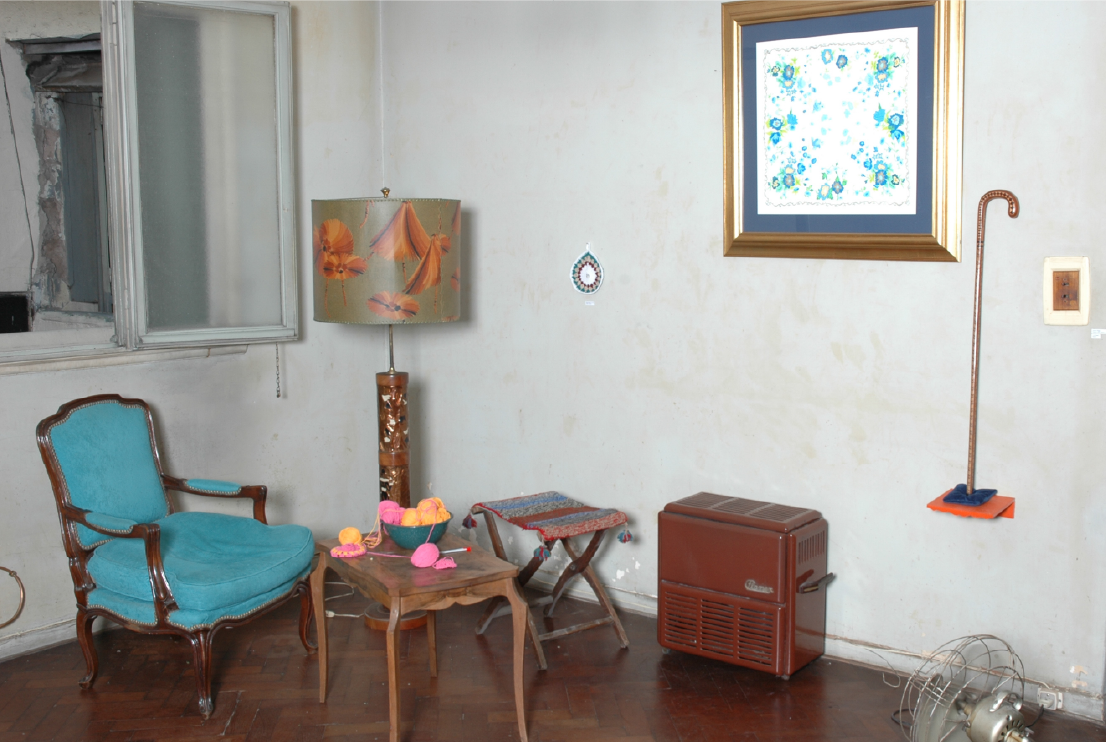
DESDE EL ALMA. Exhibición colectiva (junto a Zoe Di Rienzo, Carolina Katz y Julia Elena Dávalos), departamento deshabitado en Buenos Aires, Argentina, 2007. Vista general del living.
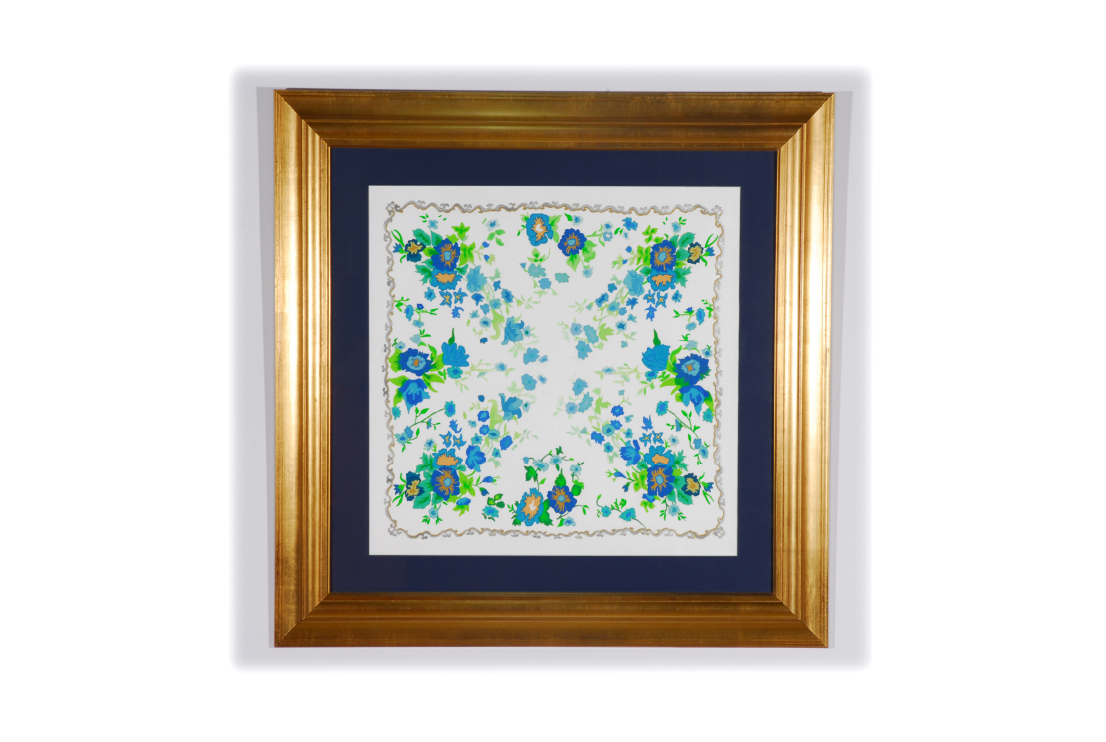
Desde el alma, motivo para llorar, 2007. Gouache sobre papel. 70 x 70 cm.
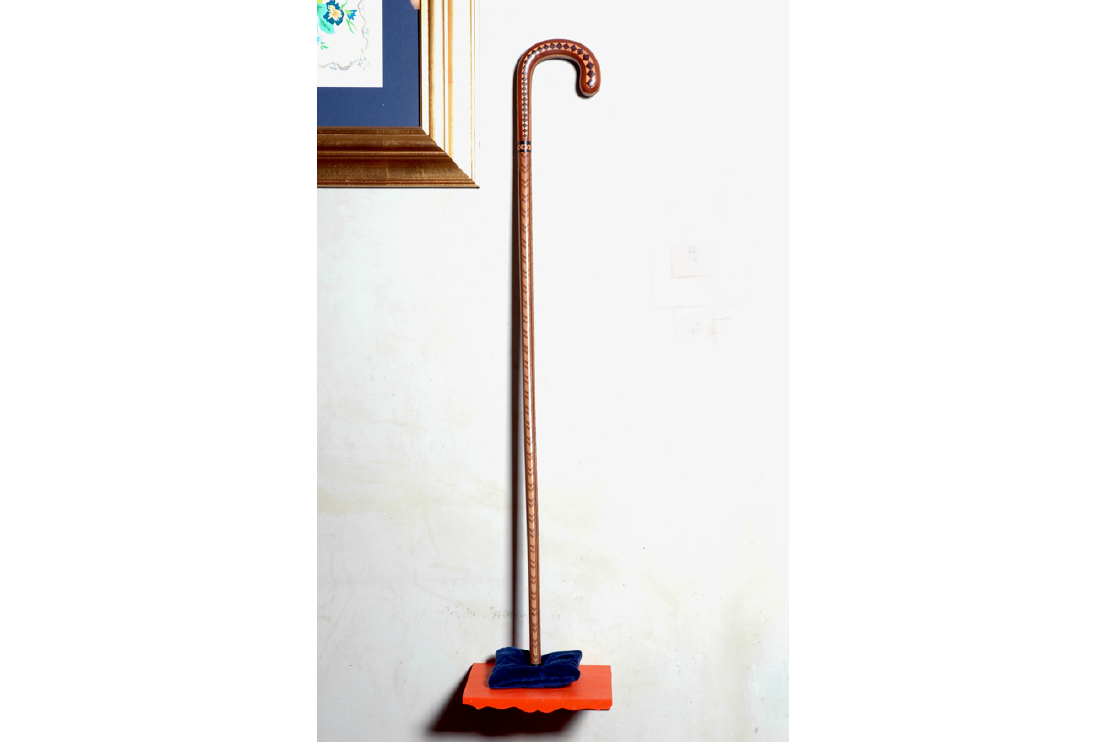
Luis Baggio. Bastón de madera. Taracea, ca. 1945.
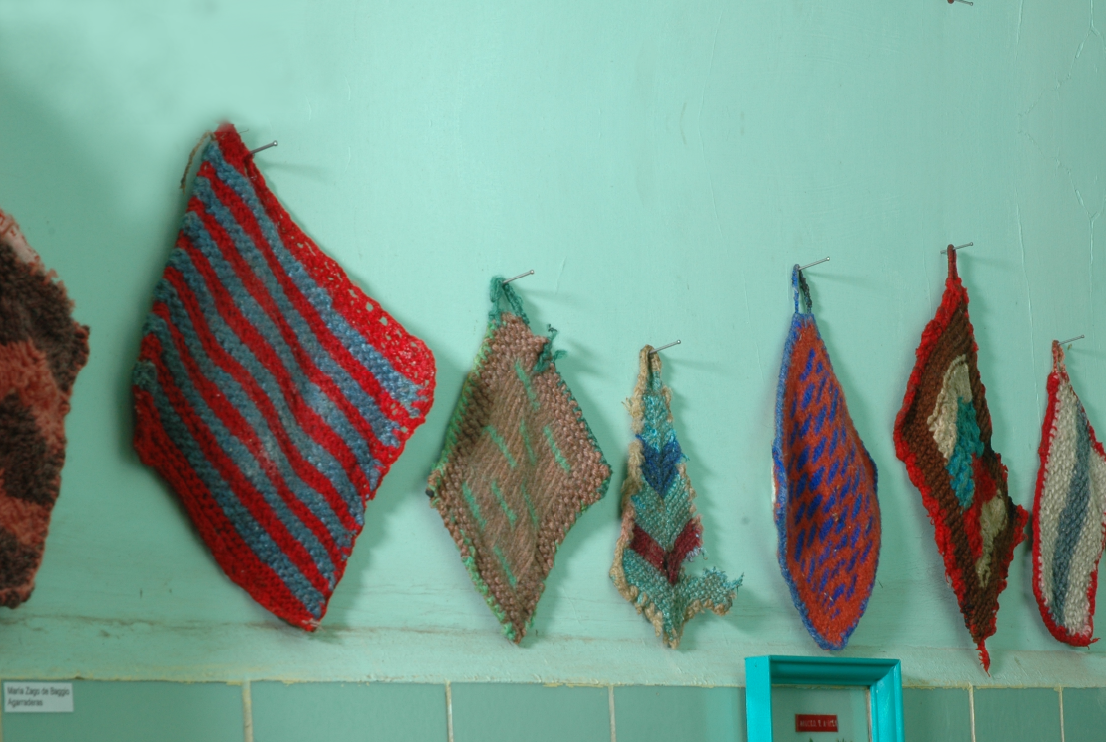
María Zago de Baggio. Agarraderas tejidas a dos agujas. ca. 1970.