SOPA
(2002)
Download textOtro tiempo en el tiempo
Text by Valeria González and Laura Lina
It is the first half of the year 2002. The atmosphere is dense and the air is heavy, making it feel impossible to breathe at times. There is a sense of the inevitable, a widespread despondency palpable in day to day activity: walking on the street, in offices and in public agencies. Few months have passed since the events of December, 20011 and the morning after is bleak. Art practice becomes increasingly collective and, along with other social actors, begins to coalesce into a broad front of resistance to neoliberalism’s ruthless onslaught. In this context, new methods of intervention articulate a renewal of forms, whether in the street, in art institutions or in unconventional spaces. How can fractured social ties be mended? What place can be conceived of for art and artists in this weave of uncertainty and gloom?
On Saturday, May 5, at Boquitas Pintadas (a hotel, restaurant, bar and art space located in the Monserrat neighborhood), a young Gabriel Baggio prepares for what will be the first in a series of performances that he will continue to develop throughout his entire career. Sopa [Soup] consisted of preparing a broth—originating in a family recipe passed down orally—together with his mother and grandmother. Each of the three protagonists was seated at their respective table, each one with their pot and portable stove burner, all connected by a single gas line. Cooking in unison, they progressively cut up the vegetables, seasoned and added different ingredients. Once the cooking time had elapsed, the attending public tried each of the soups prepared. Two professional tasters analyzed the profile (density, acidity and body) of each and registered their impressions in a duly certified and signed report.
In the second volume of L’Invention du quotidien. Habiter, cuisiner (literally, The Invention of the Everyday. Inhabiting. Cooking, published in English as The Practice of Everyday Life), Luce Giard mentions her own experience in first person once she had gained independence from her maternal home, at a moment of a reencounter with herself through culinary practice:
From the groping experience of my initial gestures, my trials and errors, there remains this one surprise: I thought that I had never learned or observed anything, having obstinately wanted to escape from the contagion of a young girl’s education . . . Yet, my childhood gaze had seen and memorized certain gestures, and my sense memory had kept track of certain tastes, smells, and colors. . . . A recipe or an inductive word sufficed to arouse a strange anamnesis whereby ancient knowledge and primitive experiences were reactivated in fragments of which I was the heiress and guardian without wanting to be. I had to admit that I too had been provided with a woman’s knowledge and that it had crept into me, slipping past my mind’s surveillance. It was something that came to me from my body and that integrated me into the great corps of women of my lineage, incorporating me into their anonymous ranks.2
Like Giard, Baggio appeals to his family genealogy and modes of transmitting knowledge and to how his own personal account is inscribed in this shared reservoir, put in practice by way of the body. The most performative aspect of Sopa lies in its successive reiterations, ways of organizing ingredients, physical positions and olfactory sensibilities, as it alludes to social practices that are never being carried out for the first time, but as a repetition that inevitably varies from previous versions.
One essential characteristic inherent to performance is the idea of “restored behavior” or “twice-behaved behavior”: it exists independently from the people carrying it out and it can save, transform or transmit information: “Restored behavior is symbolic and reflexive: not empty but loaded behavior multivocally broadcasting significances.”3 In this sense, the artist mentions the idea of imperfection as an “act of resistance” between successive generations.4 This transmission of knowledge is not limited to the parental link with his mother and grandmother; it also reverberates in the witnesses who find themselves engaged by the proposal. In the first place, this is by attending the different modalities in which the recipe is executed, which also remit to programs from the past featuring hostesses turned into television stars who demonstrate and describe the different steps involved in the culinary task in meticulous detail, and secondly, as essential participants in the ritual dimension of eating, disrupting the everyday space of this hotel-restaurant, and seeing it transformed into an art space. Through this shared everyday act of cooking, Baggio also raises questions about memories, their nooks and the (im)possibility of securing them. Memories are made present in the dynamism between bodies interacting in the exchange of inherited knowledge: fleeting, fragmented, and in continual mutation: “The sophisticated ritualization of basic gestures has thus become more dear to me than the persistence of words and texts, because body techniques seem better protected from the superficiality of fashion, and also, a more profound and heavier material faithfulness is at play there, a way of being-in-the-world and making it one’s home.”5
English version: Tamara Stuby
2020
Excerpt from the main text of the book La Tarea
_______________________________________________________
1 The denominated 2001 crisis evidences a process already in previous development and exacerbated during the 1990s; it is a period marked by a severe economic recession with serious consequences for all aspects of society. It culminated in the events that took place on the 19th and 20th of December of that year. A general demand of “que se vayan todos” [Out with them all!] reflected the mood of a society that took to the street in demonstrations in response to then-President Fernando de la Rúa’s decree of a state of emergency and curfew; he later wound up resigning. During the protests, the repression executed by police forces and by armed civilians resulted in almost forty people assassinated.
2 De Certeau, Michel; Giard, Luce and Mayol, Pierre (1999 [1980]). La invención de lo cotidiano, Mexico, Universidad Iberoamericana, volume II, p. 155.
3 Schechner, Richard (2000). Performance. Teoría y prácticas interculturales, Buenos Aires, Libros del Rojas, p. 108.
4 See the interview between Federico Baeza and the artist in this same publication.
5 De Certeau, Michel; Giard, Luce and Mayol, Pierre, op. cit., p. 157.
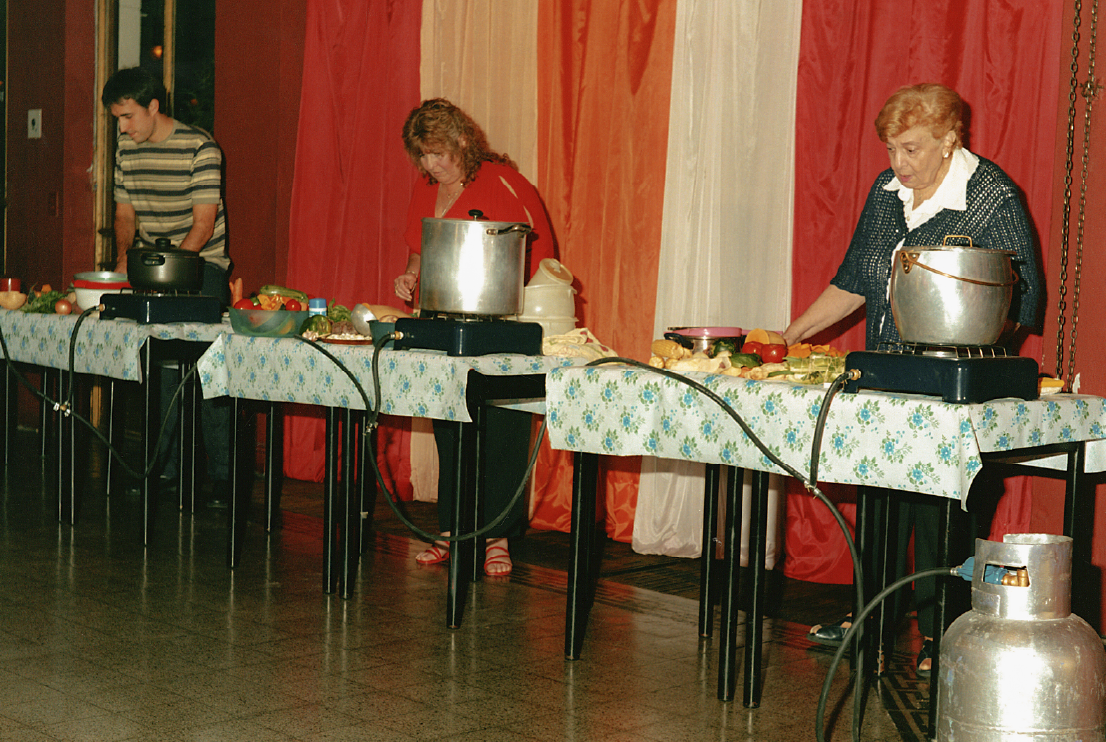
Sopa, 2002. Espacio de arte Boquitas Pintadas, Buenos Aires. Performance junto a la madre y la abuela del artista.
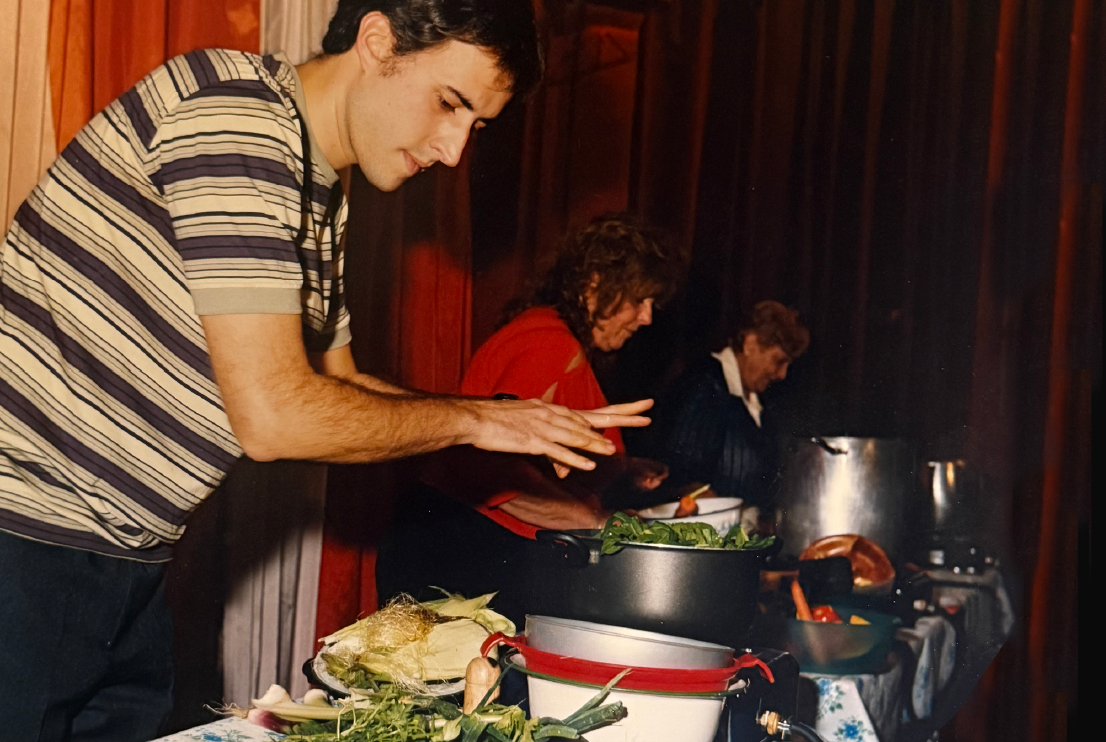
.
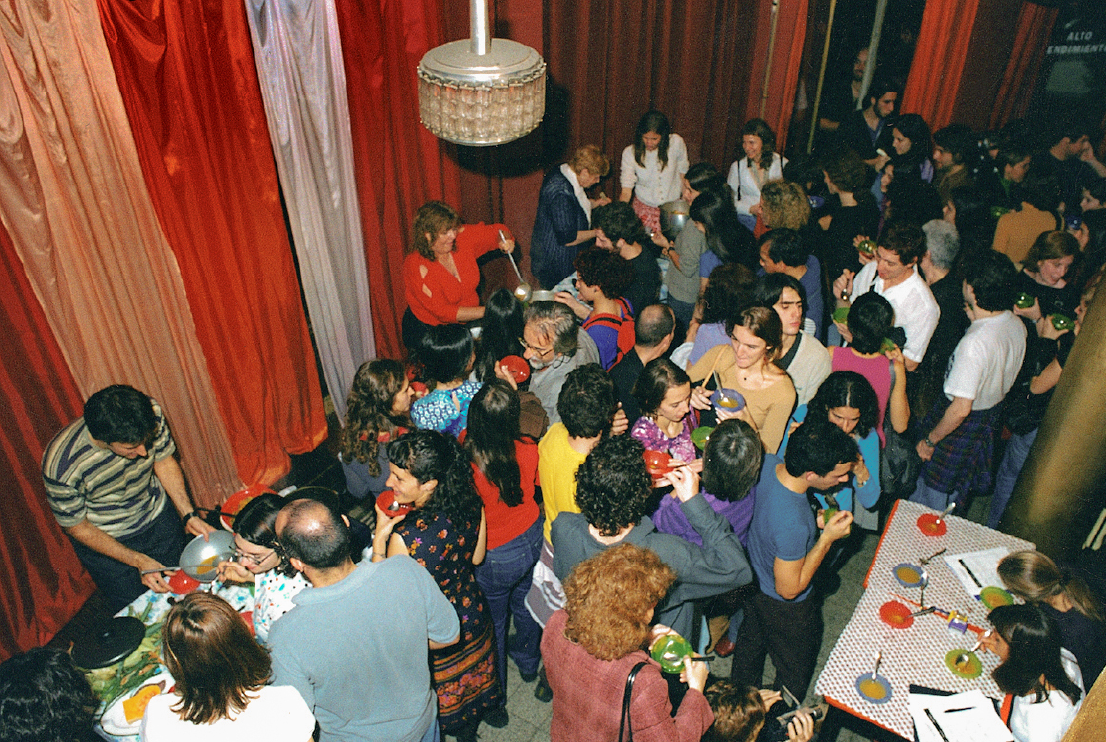
Los comensales degustando las tres versiones de la sopa.
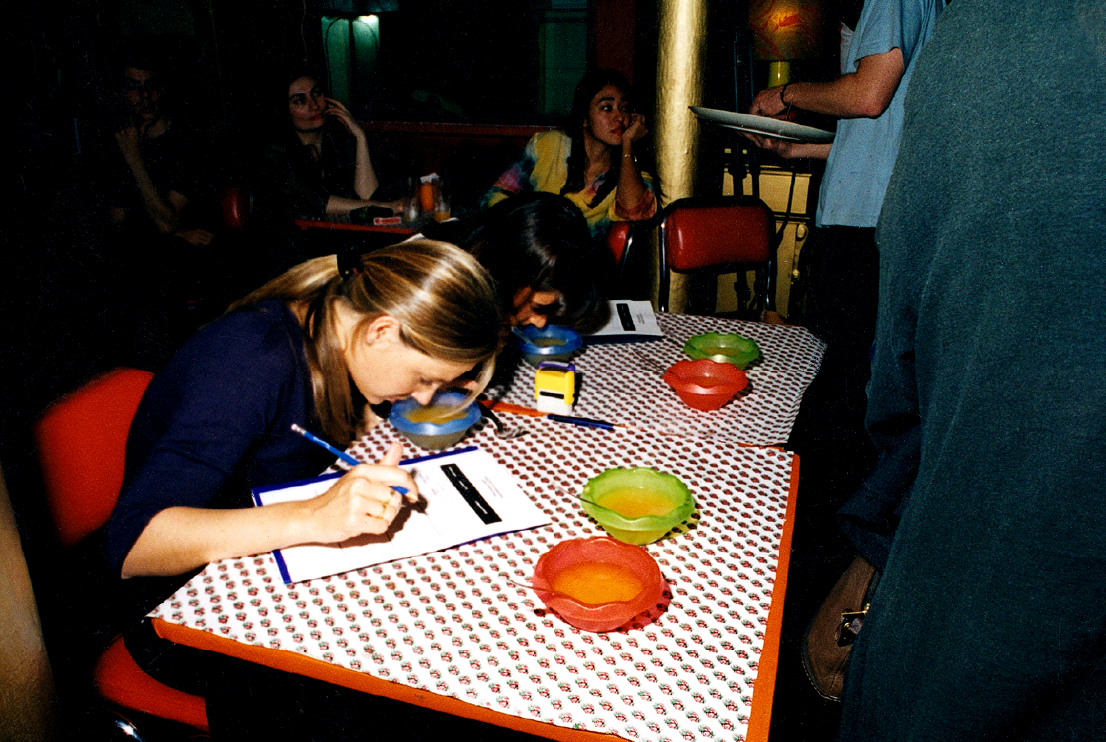
Dos saboristas profesionales hicieron el análisis técnico de las sopas y determinaron que: El perfil de sabor de la sopa I (abuela) fue LA MÁS DULCE, debido a la mayor presencia de choclo y batata. El perfil de sabor de la sopa II (madre) fue LA MÁS CONTUNDENTE Y COMPLETA, CON MÁS CUERPO, debido a la mayor presencia de carbohidratos como papa, zapallo, batata y legumbres. El perfil de sabor de la sopa III (hijo) fue LA MAS ÁCIDA Y MENOS DENSA, debido a la menor cantidad de ingredientes y a la mayor presencia de tomate y hojas verdes.
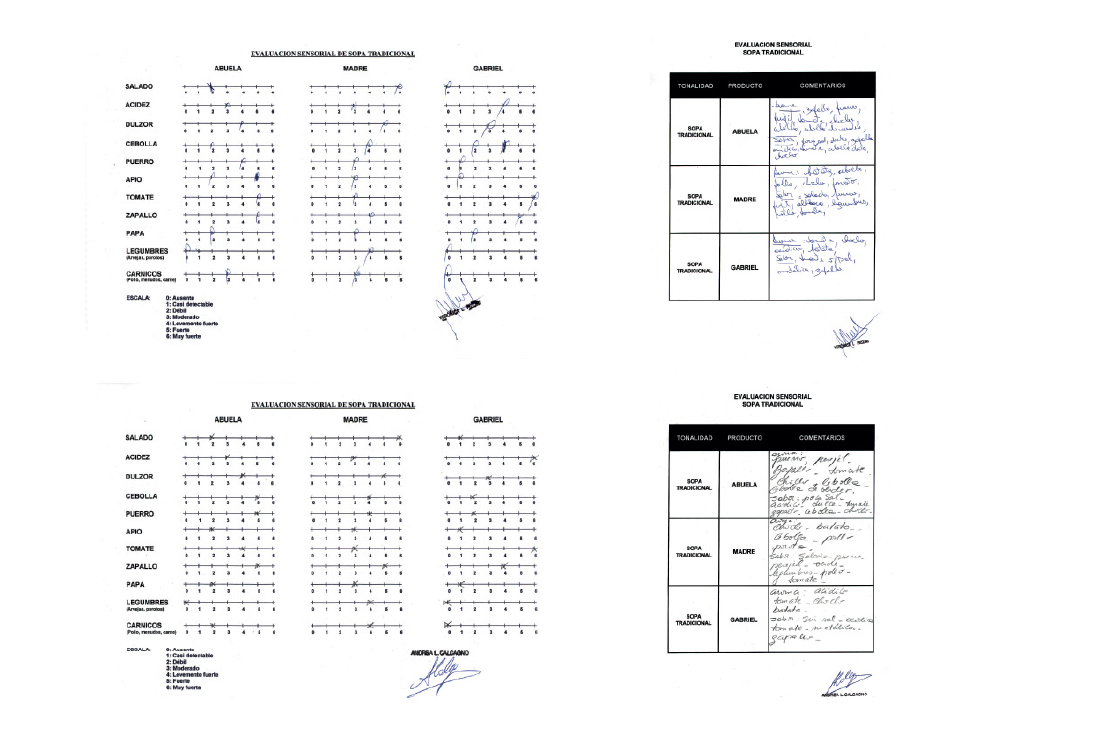
Informe producido por saboristas Verononica Pizzini y Analía Calcagno durante performance Sopa, 2002. Ficha de evaluación. 21 x 29,7 cm.